

The Nigerian Communications Commission (NCC), has emphasised that the protection and resilience of Nigeria’s Critical National Information Infrastructure (CNII) are vital to achieving the country’s ambition of becoming a one trillion dollar economy.
According to the NCC, “defending CNII is defending Nigeria’s economy,” as the nation’s digital infrastructure underpins all sectors, from finance and security to healthcare and commerce.
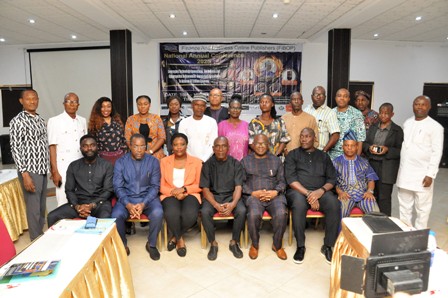
The Executive Vice Chairman and Chief Executive Officer of the NCC, Dr. Aminu Maida made this known while speaking at the Finance and Business Online Publishers Association (FiBOP) 2025 National Conference held at Orchid Hotels, Lekki, Lagos over the weekend.
Dr. Maida pointed out that while public discourse around economic growth often focuses on visible sectors such as oil, manufacturing, and agriculture, the invisible backbone that powers all these sectors today is the digital infrastructure.
He described telecommunications as “the nervous system of our economy, without which financial inclusion, digital trade, governance, national security and e-commerce cannot thrive.
“Protecting CNII is not only about keeping the Internet on. It is about powering the trillion-dollar economy we all aspire to build as a country. With Government’s support, industry innovation, security vigilance, and community participation, we will secure Nigeria’s digital backbone, protect our national lifelines, and lay the foundation for sustainable growth.”
The NCC boss revealed that between January and August 2025 alone, operators recorded over 26,000 cases of fibre cuts, vandalism and theft, posing a significant threat to economic stability and national security.
To address these challenges, the NCC, under the directive of President Bola Ahmed Tinubu and guided by the Cybersecurity Act, has designated telecommunications infrastructure as a national security asset.
Dr. Maida outlined the Commission’s five-step approach to safeguarding CNII: Regulation and Enforcement, Public Awareness, Collaboration, Mediation, and the Use of Force as a Last Resort.
According to him, this layered approach ensures that protection efforts extend beyond technical solutions, combining regulation, stakeholder coordination, and public education to secure the nation’s digital backbone.
However, Dr. Maida stressed that protection alone is not enough, calling for a shift towards building resilient networks capable of withstanding and recovering from disruptions.
“If Nigeria must reach the $1 trillion economy, we need resilient networks—systems that can bend without breaking, recover quickly from shocks, and keep the nation connected even in times of crisis,” he said.
He outlined ongoing initiatives including Telecoms Disaster Recovery and Business Continuity Guidelines, the Sectoral Computer Security Incident Response Team (CSIRT), and a new Cybersecurity Framework for the Telecom Industry. The Commission has also launched the Major Network Outage Portal to ensure transparency, mandatory reporting, and consumer protection during service disruptions.
In strengthening infrastructure standards, the NCC now requires Tower Companies (TowerCos) to implement enhanced site security, redundant power systems, and climate-resilient designs. For rural connectivity, operators must adopt solar backups, dual backhaul systems, and community partnerships.
Dr. Maida also emphasised the importance of cross-sector collaboration, noting that the NCC is working with the Central Bank of Nigeria (CBN) to safeguard mobile banking, with the Nigerian Electricity Regulatory Commission (NERC) and Rural Electrification Agency (REA) to improve power supply, and with state governments to enforce the CNII Presidential Order.
He further encouraged operators to design networks with redundancy by design through multiple fibre routes, diverse interconnections, and stronger Internet Exchange Points (IXPs), to prevent single points of failure from crippling national services.
Calling for a national commitment to CNII protection, Dr. Maida urged all stakeholders to treat digital infrastructure as a strategic economic priority. “Security agencies must treat telecom assets with the same urgency as oil pipelines or power grids,” he said, while calling on citizens to protect telecom assets in their communities “as they would their own homes.”
He referenced the recent NCC–Nigeria Governors’ Forum (NGF) Business Roundtable on Broadband Investment and CNII Protection, supported by the World Bank, as a model for multi-stakeholder collaboration towards a secure and connected Nigeria.