

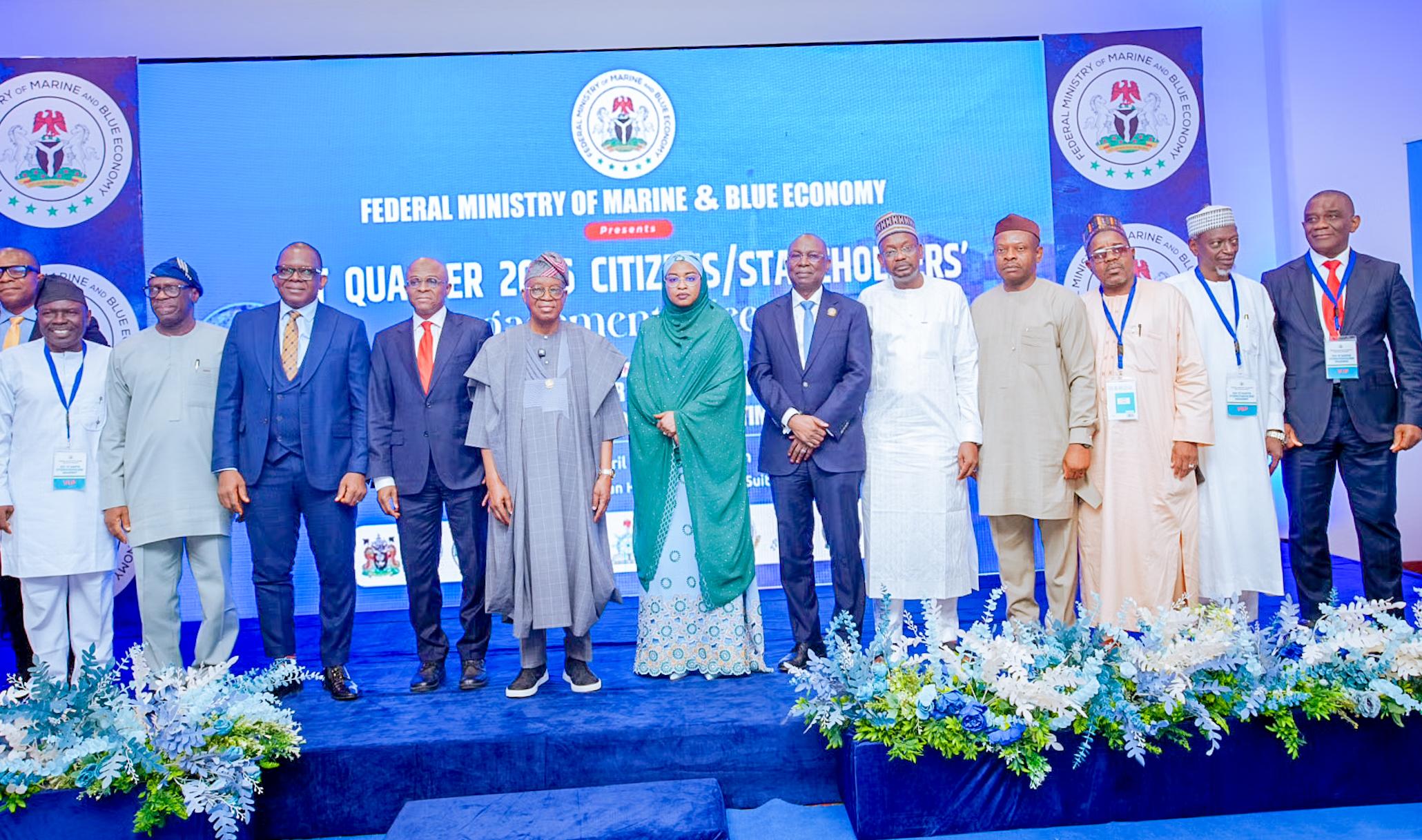
The Minister of Marine and Blue Economy, Dr. Adegboyega Oyetola, has reaffirmed that the Federal Government’s port modernisation programme is a nationwide initiative, stressing that the drive is not restricted to Lagos but is intended to uplift port infrastructure across Nigeria. Speaking at the Ministry’s combined citizens and stakeholders’ engagement, sectoral performance review, and ministerial retreat in Lagos, Oyetola reiterated that inclusive and equitable infrastructure development remains a core pillar of his Ministry’s mandate.
Addressing concerns that the modernisation effort appears to be heavily centred on Lagos ports, Oyetola insisted that the government is deliberately pursuing a balanced approach. “We are committed to a balanced and inclusive development of port infrastructure across the country,” he said, noting that development pressures in the eastern, southern, and coastal regions demand equal attention.
The Minister disclosed that procurement processes are already underway for the modernisation of key ports in Warri, Port Harcourt, Onne, and Calabar, with similar upgrades either ongoing or in the pipeline for Apapa and Tin Can Island ports in Lagos. These interventions, he explained, will cover terminal expansions, storage yard improvements, better access roads, and upgraded cargo‑handling equipment, all aimed at improving throughput and reducing congestion.
Oyetola described the overarching port‑modernisation programme as a “transformative intervention” by the administration of President Bola Ahmed Tinubu. He said the initiative targets not only physical infrastructure but also supporting systems such as digital clearing platforms, port‑community coordination, and improved security, all of which will help boost efficiency, cut vessel turnaround times, and significantly enhance cargo‑handling capacity.
Beyond upgrading existing facilities, the Minister revealed that the Federal Government has approved the development of new deep‑seaports in Bayelsa, Cross River, Akwa Ibom, and Ondo States. These deep‑seaport projects are expected to open up fresh maritime corridors along the eastern and southern flanks of the country, decongest existing terminals, and create new hubs for industrial and logistics activity.
“These projects will expand Nigeria’s maritime capacity, decongest existing ports, open up new economic corridors, and position our country as a leading maritime gateway in Africa,” Oyetola said. He added that the port modernisation drive dovetails with the Federal Government’s broader economic diversification agenda, as improved maritime infrastructure is expected to stimulate trade, reduce the cost of doing business, ease logistics bottlenecks, and attract investment across key sectors such as manufacturing, agro‑industry, and oil‑and‑gas services.