

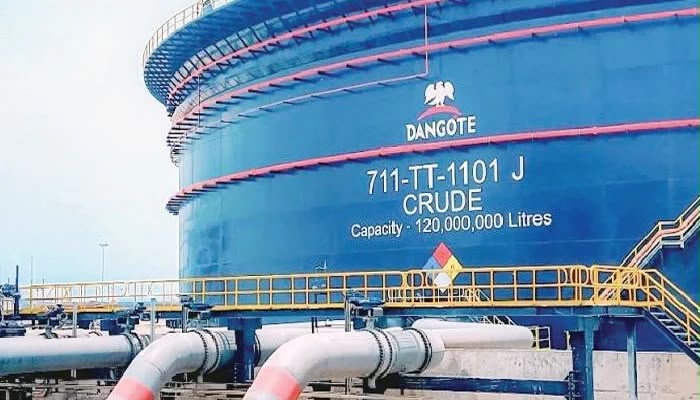
The Dangote Petroleum Refinery and Petrochemicals is poised to limit or possibly halt sales of Premium Motor Spirit (PMS) to major fuel marketers that continue to import petrol into Nigeria, citing concerns over product quality, market opacity and the risk of reputational damage from blended fuels.
The move, which could be implemented within days pending final consultations, underscores the refinery’s frustration with the persistence of imported PMS in a market now served by significant domestic refining capacity.
Insiders say the refinery is particularly troubled by reports that some marketers are mixing lower-quality imported fuel with Dangote-supplied PMS before selling the blended product to consumers. This practice, they argue, blurs the line between genuine Dangote products and adulterated blends, potentially tarnishing the refinery’s brand.
A source close to the refinery’s management questioned the logic of investing billions to produce high-specification fuel for Nigerians, only to see it diluted with imports of uncertain quality and still sold under the Dangote name.
Beyond blending concerns, the refinery has also flagged the absence of robust quality assurance infrastructure, including a standardized testing laboratory under the regulator, to independently verify the specifications of imported petroleum products entering the country.
These issues arise as Nigeria’s downstream oil sector shifts from decades of import reliance toward self-sufficiency through local refining. The Dangote facility, with a nameplate capacity of 700,000 barrels per day, has become a key supplier of refined products domestically and internationally, meeting global quality benchmarks.
The U.S. Energy Information Administration recently credited the refinery with driving a dramatic rise in Nigeria’s seaborne petroleum product exports, which averaged 561,000 barrels per day in the second quarter of 2026—up sharply from just 79,000 barrels per day in 2023.
Dangote’s jet fuel, in particular, has gained strong traction in global markets. The refinery has repeatedly ranked as Europe’s largest external supplier of jet fuel in recent months, outpacing traditional exporters from the U.S. and the Middle East.