

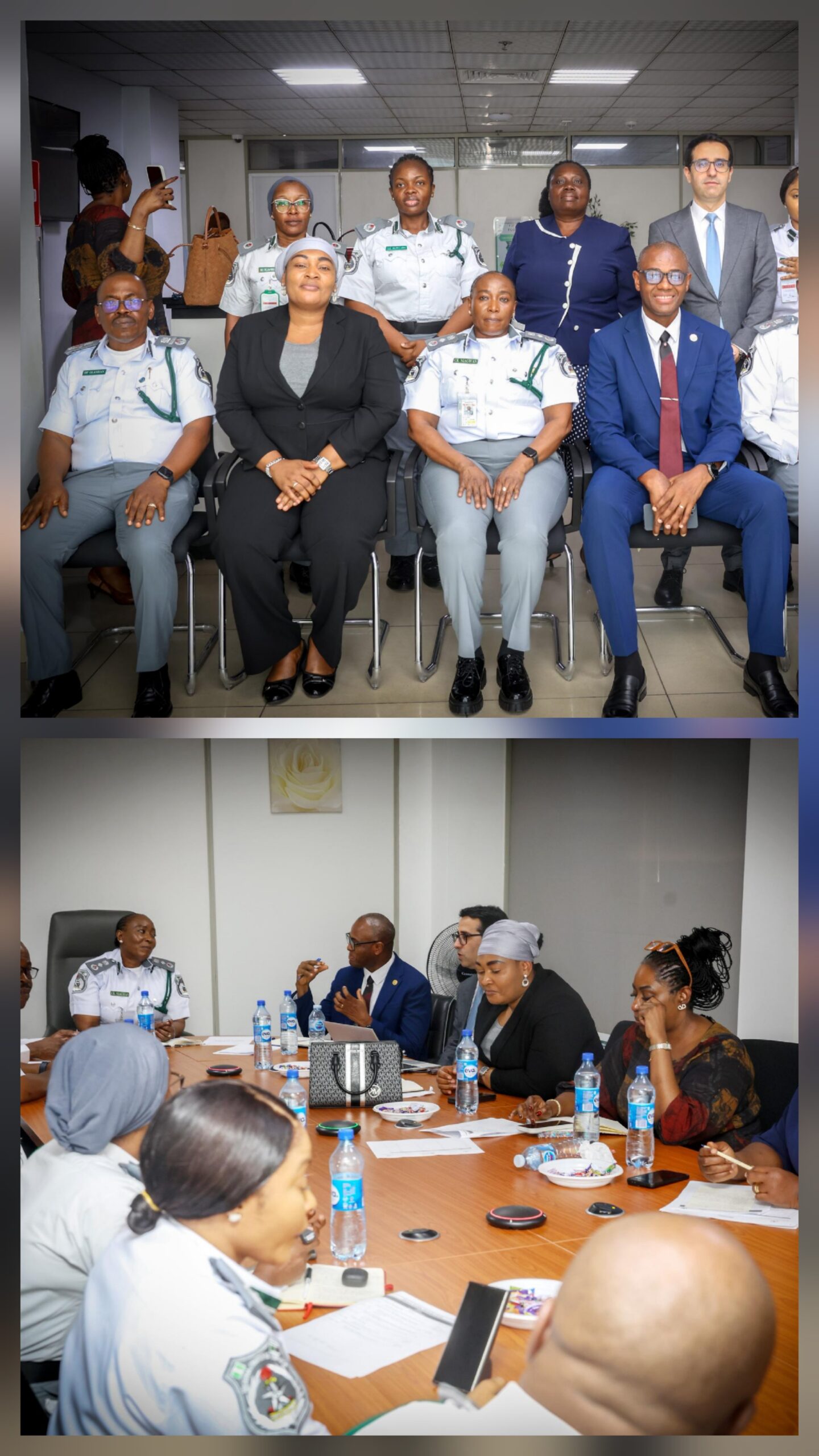
The Nigeria Customs Service (NCS) has taken a major step toward easing cross‑border commerce by holding a high‑level technical engagement with the African Continental Free Trade Area (AfCFTA) Secretariat at its headquarters in Maitama, Abuja, on 23 March 2026. The meeting focused on operationalising the Simplified Trade Regime (STR) to support small‑scale traders and informal cross‑border commerce under the AfCFTA agenda.
The Comptroller‑General of Customs was represented by the Deputy Comptroller‑General (Tariff and Trade), DCG Caroline Niagwan, who pledged that the NCS would design simpler, more transparent customs procedures to include Micro, Small, and Medium Enterprises (MSMEs) in regional trade. “Our objective is to make cross‑border trade easier and more inclusive for small traders, without compromising compliance with national and continental rules,” she said, underscoring Nigeria’s role as a regional trade hub.
Leading the AfCFTA side, Pedro Estevao explained that Nigeria had been designated the pilot country for the Simplified Trade Regime in West Africa, given its large domestic market and strategic position on the continent. He stressed that streamlining procedures for small‑scale traders would unlock new income streams, reduce informal trade, and deepen regional integration.
During the session, the NCS unveiled a draft Standard Operating Procedure (SOP) for implementing the STR, covering informal cross‑border trade, passenger baggage, and low‑value e‑commerce flows. The proposed process relies on digital declarations, risk‑based checks, and reduced paperwork to speed up clearance while still meeting regulatory requirements.
AfCFTA consultant Nabil Zibani outlined the continental STR framework, highlighting the need for simplified, accessible systems that enable MSMEs, especially women traders, to participate fully in regional markets. Both sides identified strong alignment between the NCS draft and the AfCFTA blueprint, particularly on lowering documentation burdens, using digital platforms, introducing de minimis thresholds for small consignments, and ensuring gender‑inclusive trade policies.
The two parties agreed on the importance of ongoing technical collaboration to address operational gaps, refine risk‑management tools, and synchronise national and continental procedures. The engagement positions Nigeria as a key pilot for the AfCFTA’s Simplified Trade Regime, reinforcing the NCS’s commitment to cutting trade costs, reducing port congestion, and advancing inclusive, regional economic growth.