

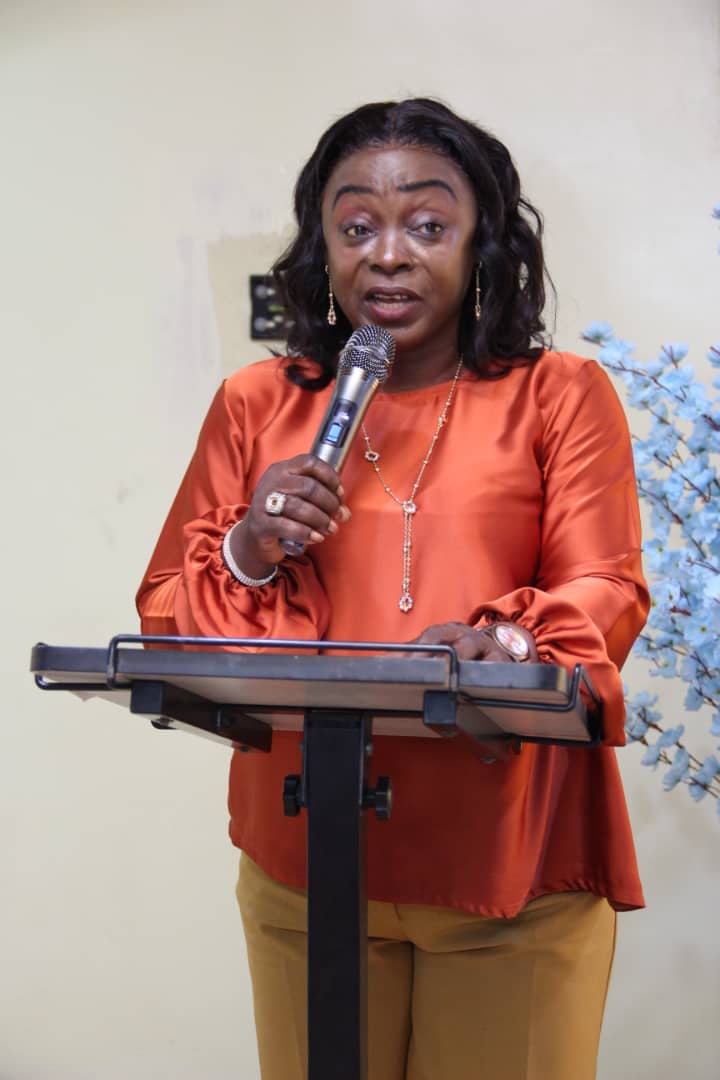
The President of the Association of Maritime Journalists of Nigeria, AMJON, Vera Osokpo, has declared the association’s 2026 Annual Conference open, themed “Attaining Port Efficiency in the Face of Emerging Technology.” Speaking at the event held at the Rockview Hotel, Apapa, in Lagos, she welcomed delegates, regulators, operators, and other stakeholders, describing the conference as AMJON’s parliament where the maritime media sets the agenda for the broader maritime sector.
Vera Osokpo explained that the theme was deliberately chosen to reflect the fast‑changing nature of global trade, where artificial intelligence is now clearing cargo in ports such as Singapore, blockchain tracks containers in Rotterdam, and Ghana operates a 24‑hour port environment on a single platform. She cited data from UNCTAD showing that 90 per cent of Nigeria’s trade flows through its ports, while the World Bank estimates that every additional day of delay can cut about 5 per cent of that trade. She also referenced the Lagos Chamber of Commerce and Industry, which puts the annual loss to port inefficiency at around 19 billion dollars.
She stressed that emerging technology is no longer a subject for tomorrow’s discussion but a present‑day challenge that Nigeria cannot afford to fail. Positioning AMJON, now in its 12th year, as a bridge between policy and port operations, between technology providers and frontline workers such as truck drivers, and between boardrooms and berths, Osokpo pledged that the association will not serve as a cheerleader for failure but will instead champion genuine reforms. Where technology is deployed effectively, she said AMJON will amplify the success, and where equipment such as cargo scanners lies idle, it will ask tough questions.
Vera Osokpo thanked regulators and port operators for honouring the association’s invitation, pointing to the crowded hall as proof that meaningful dialogue between the media and key stakeholders remains possible. She called for open access to information, professional respect for the media, and sincerity of purpose, arguing that these three conditions would enable the maritime media to project a more accurate and balanced narrative of the Nigerian port environment.
She also acknowledged the evening’s awardees, highlighting officials, practitioners, and thought leaders whose work, integrity, and innovation have contributed to progress in the maritime, logistics, and port sectors. She described the awards not as mere tokens but as the media’s way of affirming that excellence still exists and continues to shape the industry. Turning to her colleagues in AMJON, Vera Osokpo urged them to listen attentively, ask probing questions, and reflect deeply on the issues discussed, noting that the stories and headlines they produce will help shape policy direction and public understanding of the maritime sector. She concluded by reiterating the media’s readiness to support sustainable reforms in Nigeria’s port ecosystem.