

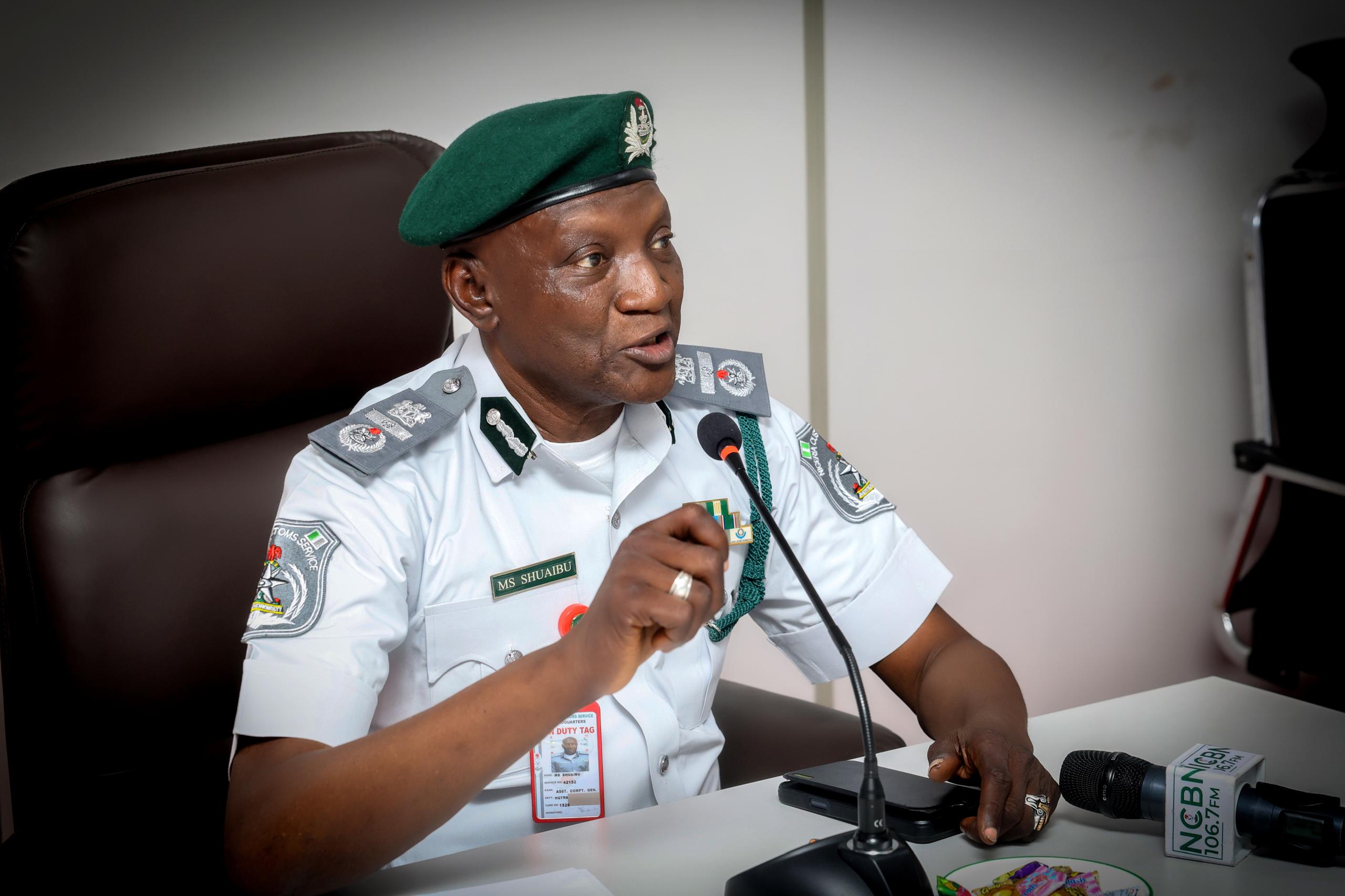
The Nigeria Customs Service has intensified its efforts to curb money laundering and terrorism financing with a sensitisation and training session on Anti‑Money Laundering and Countering the Financing of Terrorism at its National Headquarters in Maitama, Abuja. The event, held on Monday, 4 May 2026, formed part of the Service’s first‑quarter operational review and brought officers of the Anti‑Money Laundering and Countering the Financing of Terrorism Unit together to deepen technical skills, reinforce ethical standards, and strengthen inter‑agency coordination.
Assistant Comptroller‑General in charge of Headquarters, Muhammad Shuaibu, described the workshop as evidence of the growing strategic importance of the Anti‑Money Laundering and Countering the Financing of Terrorism Unit within the Service and Nigeria’s broader financial‑security architecture. He noted that the Unit’s impact now spans seaports, airports, land borders, and financial nodes, and that its performance over the past year has made it a central pillar in protecting the national financial system.
Shuaibu highlighted recent advances in Nigeria’s financial landscape, such as the global acceptance of Nigerian‑issued debit and credit cards, which now enable seamless cross‑border transactions with automatic currency conversion. He described this as a major leap in the country’s economic integration, warning that such progress must be matched with tighter controls to prevent abuse by criminal networks.
He urged officers to view postings to the Anti‑Money Laundering and Countering the Financing of Terrorism Unit as valuable opportunities for professional growth and exposure to advanced investigative and compliance techniques, rather than as administrative reassignments. The Assistant Comptroller‑General also reiterated the Nigeria Customs Service’s partnership with the World Customs Organization to align its operations with global standards.
Ag. Provost Marshal, Deputy Comptroller of Customs, Saulawa Sunusi, emphasised the need for integrity, discipline, and professionalism in every aspect of duty. He called on officers to remain committed to transparency, personal conduct, and objective service, and reiterated the importance of continuous learning and leading by example. Sunusi also stressed the need for internal cohesion, clear communication, and respectful conflict resolution within the Service, while warning against the unauthorised disclosure of confidential information and insisting on strict adherence to official channels.
The session featured a lecture on service correspondence by Deputy Comptroller Faisal Abubakar, who walked participants through the principles of clear, structured, and compliant official communication. National Coordinator of the Anti‑Money Laundering and Countering the Financing of Terrorism Unit, Mas’ud Salihu, said financial crime is increasingly shifting into digital and virtual spaces, with fraudsters exploiting fintech platforms and online payment channels. He noted that the Nigeria Customs Service is working to refine its enforcement frameworks, close operational gaps, and strengthen the link between field operations and management oversight.
Salihu described continuous sensitisation as a core strategy in the fight against financial crime, urging officers to stay alert, adopt a preventive posture, and quickly identify emerging red flags. He thanked participants for their engagement and commended the Service’s leadership for its sustained support to the Anti‑Money Laundering and Countering the Financing of Terrorism framework, underscoring that Nigeria’s economic resilience depends on a vigilant, well‑trained, and ethically grounded customs institution.