

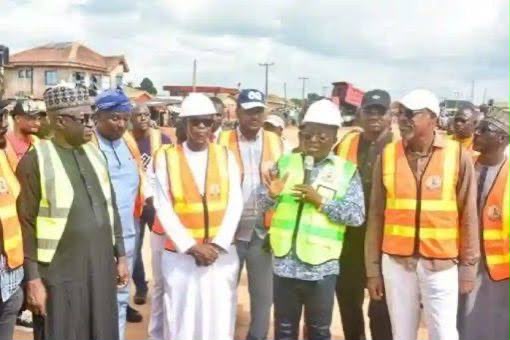
Lagos State Governor Babajide Sanwo-Olu has dismissed claims that the Lagos-Calabar Coastal Highway is responsible for flooding in parts of the state, saying the reports are misleading and ignore the city’s natural flood risk.
He made the remarks during a courtesy visit by the Minister of Works, David Umahi, and members of the National Assembly. Sanwo-Olu said Lagos is a coastal city with limited landmass and a large water footprint, so some level of flooding during heavy rainfall is inevitable.
The governor said social media has amplified a false narrative by showing flood images without explaining that water usually recedes after peak rainfall. He added that poor waste disposal, especially blocked drainage channels, remains a major cause of flooding in the state.
Sanwo-Olu said the state has already banned styrofoam because of its environmental impact and will introduce more regulations to reduce flooding risks. He also said Lagos has begun clearing the Lagos-Badagry Expressway to protect infrastructure and will enforce zero tolerance for activities that damage roads and drainage systems.
On the coastal highway itself, he said the state has arranged for mechanised street cleaning to maintain the road daily. He also said service roads will be important for access and for protecting the main carriageway, even if some structures have to be removed to make room for the project.
Umahi said President Bola Tinubu ordered the inspection after social media reports blamed the highway for flooding. He said the claims were false, noting that flooding had been predicted in several states and was not unique to Lagos.
The minister said the highway was deliberately elevated to withstand ocean surges and protect the corridor for decades. He added that the affected areas were swampy before construction began, and buildings built below approved flood levels would still flood regardless of the road.
Umahi praised Lagos’ drainage master plan and said more than 80 per cent of evacuation channels leading to the lagoons are already completed. He said the federal and state governments will work together on more drainage routes, service lanes, surveillance systems and other infrastructure along the corridor.
He also said strict development control will be enforced to keep the project in line with international standards.