

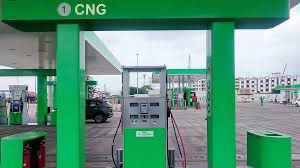
President Bola Tinubu has commissioned new compressed natural gas infrastructure designed to speed up Nigeria’s shift toward cleaner and more affordable energy for transportation.
The commissioning exercise in Abuja on Friday unveiled the Rolling Energy High-Capacity Daughter Booster Station in Jahi, together with similar facilities delivered by Ibile Oil and Gas and Portland Energy in Lagos, and Femadec in Owerri.
These projects are part of a wider national push to expand gas use and help the Federal Government meet its goal of powering about one million vehicles with alternative fuel.
So far, only around 100,000 vehicles in Nigeria have been converted to run on gas, hindered by inconsistent gas supply.
The President, represented by Minister of State for Petroleum Resources (Gas) Ekperikpe Ekpo, said the newly commissioned facilities show growing private-sector involvement in gas infrastructure development.
He said the projects, backed by the Midstream and Downstream Gas Infrastructure Fund, reflect rising investor confidence in Nigeria’s gas sector and support the government’s Decade of Gas Initiative.
These investments align directly with the Federal Government’s commitment to use natural gas as a catalyst for industrialisation, energy security, transport transformation, and economic diversification, Ekpo said.
Nigeria boasts about 215 trillion cubic feet了 of proven gas reserves, among the largest globally. The government has consistently stressed the need to prioritise domestic use of this resource over exports.
The Jahi facility, built by Rolling Energy in partnership with MDGIF, is set to play a key role in expanding CNG access in the Federal Capital Territory.
It can sell 1,000 standard cubic metres of gas per hour and is backed by two CNG tube skids with a combined capacity of 17,000 standard cubic metres.
Ekpo said the development supports the Presidential Initiative on Compressed Natural Gas, which seeks to cut reliance on petrol and diesel after fuel subsidy removal.
Mubarak Umar Danbatta, Chief Executive Officer of Rolling Energy Limited, called the project a milestone in Nigeria’s clean energy transition, noting the facility has been serving 350 to 400 vehicles daily since operations began.
He said the project shows growing acceptance of gas-powered transport among Nigerians, largely driven by rising fuel costs and the search for cheaper alternatives.