

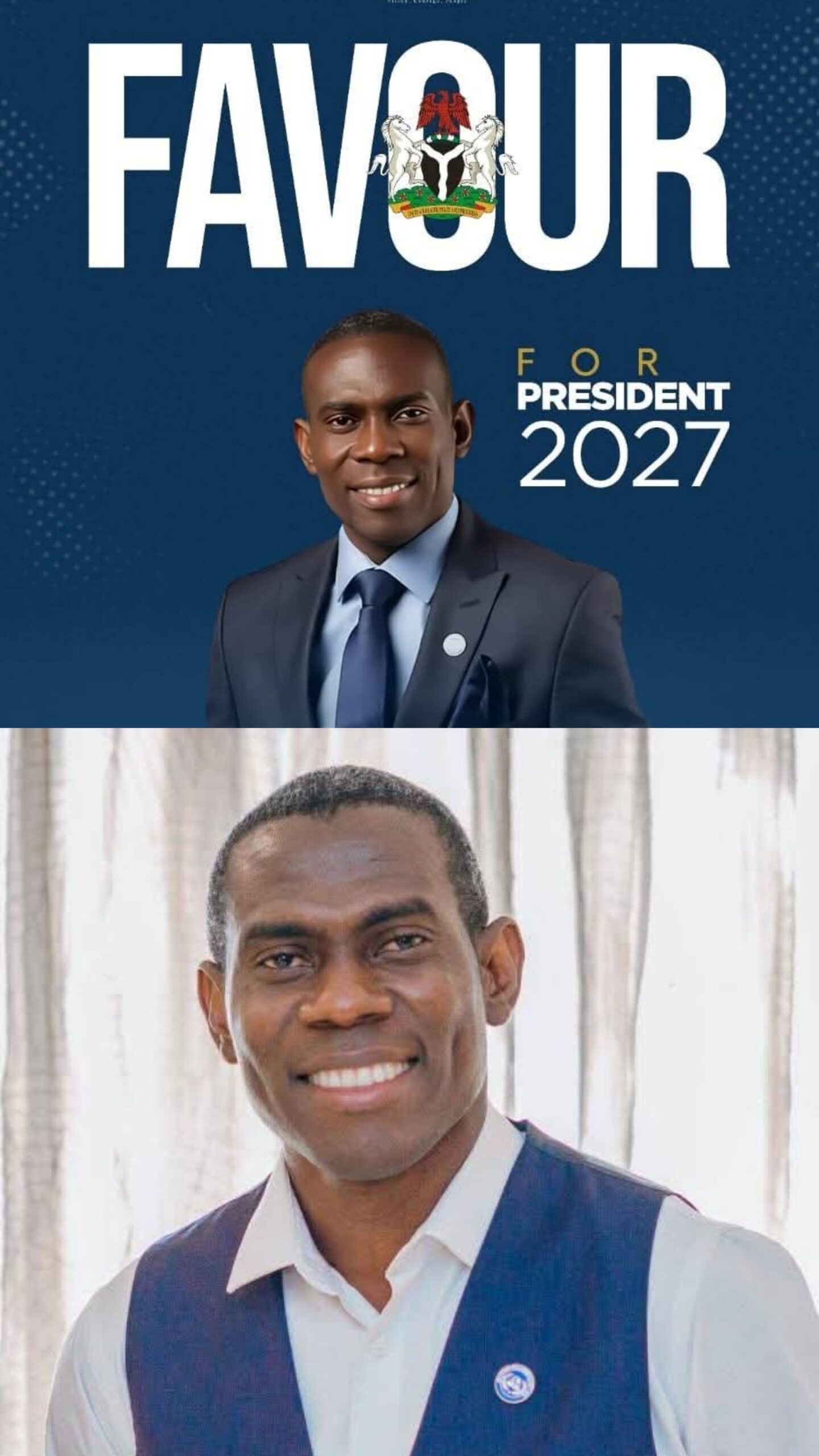
Nigeria is moving closer to the 2027 general elections while the country grapples with deepening economic difficulties, widespread insecurity, and growing public anger toward leaders who have failed to deliver meaningful progress. Against this backdrop of national frustration, a new political figure has emerged seeking to reset the country’s direction through presidential candidacy.
Professor Oluwamuyiwa Favour Ayodele, who goes by the name The Carpenter, has officially declared his intention to compete for the presidency of the Federal Republic of Nigeria. His entry into the political scene represents something beyond conventional election participation. Ayodele describes himself as a force for systemic transformation who believes Nigeria requires fundamental structural rebuilding rather than minor policy corrections.
He views the nation as suffering from serious institutional breakdown manifesting in unreliable electricity, expanding wealth gaps, massive youth joblessness, continuous security threats, and profound distrust between citizens and government institutions. His campaign message argues these problems connect to each other and demand coordinated national reconstruction efforts.
Ayodele’s Carpenter identity serves as symbolism for his core philosophy that Nigeria’s governance framework has deteriorated over time and must be reconstructed from its base rather than merely repaired at surface level. He refuses to join traditional political party alignments and instead presents himself as an independent reform voice motivated by urgency, change, and moral obligation to restore national honor.
His presidential declaration stresses accountability measures, corruption elimination, youth participation in governance, and national renewal based on the principle that leadership must genuinely reflect how citizens live their daily lives. Supporters believe Ayodele offers a credible alternative path for Nigeria because he questions established political assumptions rather than accepting them.
Electricity reform forms the heart of his Governance, Electricity and Transformation agenda since he argues Nigeria’s development stagnation fundamentally stems from unstable power supply. Without consistent electricity, he maintains that industrial expansion, educational advancement, healthcare improvement, and job creation remain impossible regardless of other policies implemented.
His political messaging directly addresses Nigeria’s actual conditions including poverty, insecurity, inflation, unemployment, and declining public confidence rather than abstract political promises. Supporters see this as his strength because he connects governance to everyday survival challenges people face.
Ayodele operates outside established political networks as an independent candidate arguing that Nigeria’s governance failures partly result from recycled leadership patterns. Supporters view this outsider position as advantageous in a system where political continuity has historically limited innovation and accountability.
Given that young people dominate Nigeria’s population, Ayodele’s movement through the Carpenter Movement Worldwide emphasizes youth political participation and awareness building. Supporters believe this approach is essential in a country where youth comprise the majority but remain excluded from decision-making processes.
He consistently presents governance as moral obligation with messaging stressing transparency, equal legal treatment, and leadership accountability. In an environment where institutional trust has collapsed, supporters argue moral leadership clarity represents necessary political correction.
Nigeria currently faces economic pressure, security challenges, infrastructure gaps, and rising citizen dissatisfaction creating a political environment where voters evaluate candidates based on authenticity and vision clarity rather than party labels alone. Ayodele’s emergence reflects shifting expectations where movement-based narratives gain traction over traditional party structures.
What distinguishes Ayodele’s political identity is his positioning as a builder entering a broken system to reconstruct it rather than preserve it. His rhetoric emphasizes urgency, reform, and national renewal. Whether this generates broad electoral support remains uncertain but his presence adds new dimension to Nigeria’s evolving political discourse.
As 2027 approaches one fact is clear: Ayodele has positioned himself as a candidate committed to disrupting conventional politics and advancing accountability, reform, and national transformation narratives. In a nation seeking direction, challengers frequently reshape the debate itself.