

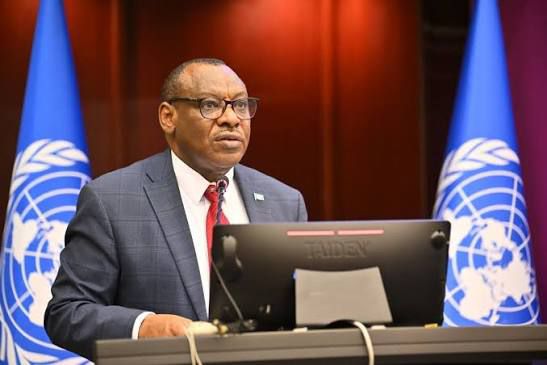
African governments are being called on to tap domestic resources and align investment strategies to construct the digital infrastructure needed for the continent’s digital transformation. Clement Abas Apaak, Ghana’s Deputy Minister of Education, urged African leaders to dedicate 1% to 2% of annual gross domestic product to a unified fund for financing digital infrastructure across the continent. He presented this proposal at the eLearning Africa conference on June 9 in Accra, Ghana.
Apaak stressed that African countries must build their own infrastructure and train their own experts to integrate artificial intelligence while protecting their history, culture, and value systems. He questioned digital independence when emails still route through Europe and America before reaching African users. Currently, Africa operates approximately 307 megawatts of data center capacity, representing under 2% of global capacity, despite these facilities being essential for AI development.
Europe and Asia-Pacific together hold 63% of active cloud regions globally, while demand for digital infrastructure continues climbing sharply. U.S. research company Arizton assessed Africa’s data center construction market at $1.24 billion in 2025 and projects it will reach $4.58 billion by 2031, showing a 24% compound annual growth rate according to a May 2026 study.
Beyond data centers, Africa faces shortages of Internet Exchange Points. A May 2024 Coalition for Digital Africa study found 63 operational IXPs across 38 countries, up from 36 IXPs in 26 countries during 2016. The African Development Bank estimates AI could generate an extra $1 trillion in GDP for the continent by 2035, prompting governments, development institutions, and private stakeholders to increase AI support efforts.
The AfDB and UNDP launched the “AI 10 Billion” initiative in February 2026 to mobilize $10 billion by 2035 and create 40 million jobs. Separately, stakeholders announced a $60 billion African AI Fund at the Kigali Summit in April 2025, targeting computing infrastructure, AI startups, and talent development.
Structural challenges still limit progress. Africa holds only 3% of global AI talent, while brain drain continues weakening local capabilities. Kenya, Nigeria, South Africa, and Egypt attracted over 83% of AI startup funding in 2025, revealing persistent geographical concentration. Africa also faces a critical energy crisis, with approximately 600 million Africans lacking reliable electricity access, creating a major obstacle for large-scale technology deployment.
Private companies have partially filled the infrastructure gap. Google, Microsoft, Oracle, and Huawei have expanded cloud computing, AI, and digital infrastructure investments across the continent. Google launched its Johannesburg cloud region in 2025 after investing $148 million. Microsoft announced a $300 million investment to expand cloud and AI infrastructure in South Africa by 2027.
However, these investments primarily serve commercial goals and may not align with Africa’s digital sovereignty priorities. Apaak warned that African countries could remain dependent on infrastructure governed by external rules unless governments mobilize substantial domestic resources for control over governance, data management, and operating systems.