

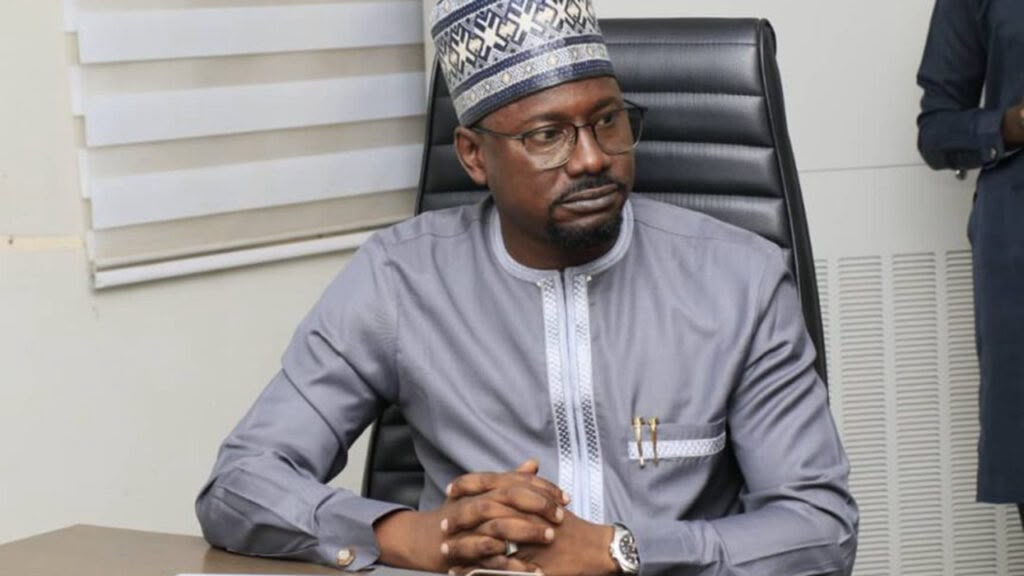
Dr. Abba Aliyu, Managing Director of Nigeria’s Rural Electrification Agency, used a keynote address this week to push back on a common assumption about decentralised power: that mini-grids exist mainly to bring electricity to remote communities. Speaking at the inaugural Samuel Ibiyemi Memorial Lecture, under the title “From Subsidy to Solvency: Can Mini-Grids De-risk Nigeria’s Power Sector?”, Aliyu argued the technology has matured into something closer to a financial instrument, a way to make electricity investment less risky and more attractive to private capital.
His core argument centres on where public money should go. Rather than continuing to subsidise a power sector burdened by inefficiency, Aliyu said government resources should be used to reduce the risk private investors face when putting money into electricity infrastructure. “Too often, mini-grids are viewed only as rural electrification projects,” he said. “In reality, they represent a new commercial model for electricity delivery. They are built around verified demand, utilise digital revenue collection, minimise losses, and provide investors with greater certainty over cash flows. In other words, they reduce investment risk.”
Aliyu framed Nigeria’s electricity problem as financial as much as physical. He pointed to Nigerian businesses spending an estimated $14 billion each year running their own generators, alongside distribution companies that continue to lose revenue to technical inefficiencies, as evidence that the sector’s core issue isn’t only a shortage of infrastructure but a shortage of investor confidence. “The future of public financing should not be to subsidise inefficiency but to de-risk investment. Public resources should catalyse private capital, not replace it,” he said.
To back the argument, Aliyu pointed to REA’s existing deployment numbers: close to 200 isolated mini-grids built, more than 164,000 mini-grid connections delivered, and roughly 1.4 million households and businesses connected through stand-alone solar systems. That activity, he said, has already helped attract more than $1.2 billion in private-sector financing commitments, a sign, in his view, that the model works at scale.
He also pointed to where the agency is heading next: a partnership with electricity distribution companies to build 48 interconnected mini-grids in urban and peri-urban areas, adding an estimated 288 megawatts of clean generation and battery storage directly into the existing grid. Rather than treating this as competition with the national grid, Aliyu described it as reinforcement. “This demonstrates that decentralised energy is not competing with the grid, it is strengthening it,” he said. He summarised his broader philosophy as a shift in what government support is meant to achieve over time: “The question before our generation is how government support can create a market that ultimately requires less government support. That is the transition from subsidy to solvency.”
The lecture itself carried personal significance beyond the policy content. It opened with remarks from Shindara Ibiyemi, Managing Director of NewsDirect TV, who welcomed attendees on behalf of her family in honour of her late father, Prince (Dr.) Samuel Ibiyemi, marking three years since his passing. She spoke about his influence on her own development, describing a transformation from a reserved individual into someone now leading a media subsidiary, and credited that shift directly to his mentorship. She noted that focusing the inaugural lecture on the energy sector fit naturally with her father’s decades-long career covering the industry as a journalist. The event also marked the formal launch of the Samuel Folorunsho Ibiyemi Foundation, which she said is designed to carry forward her father’s reputation for generosity through a lasting, structured initiative to support others.