

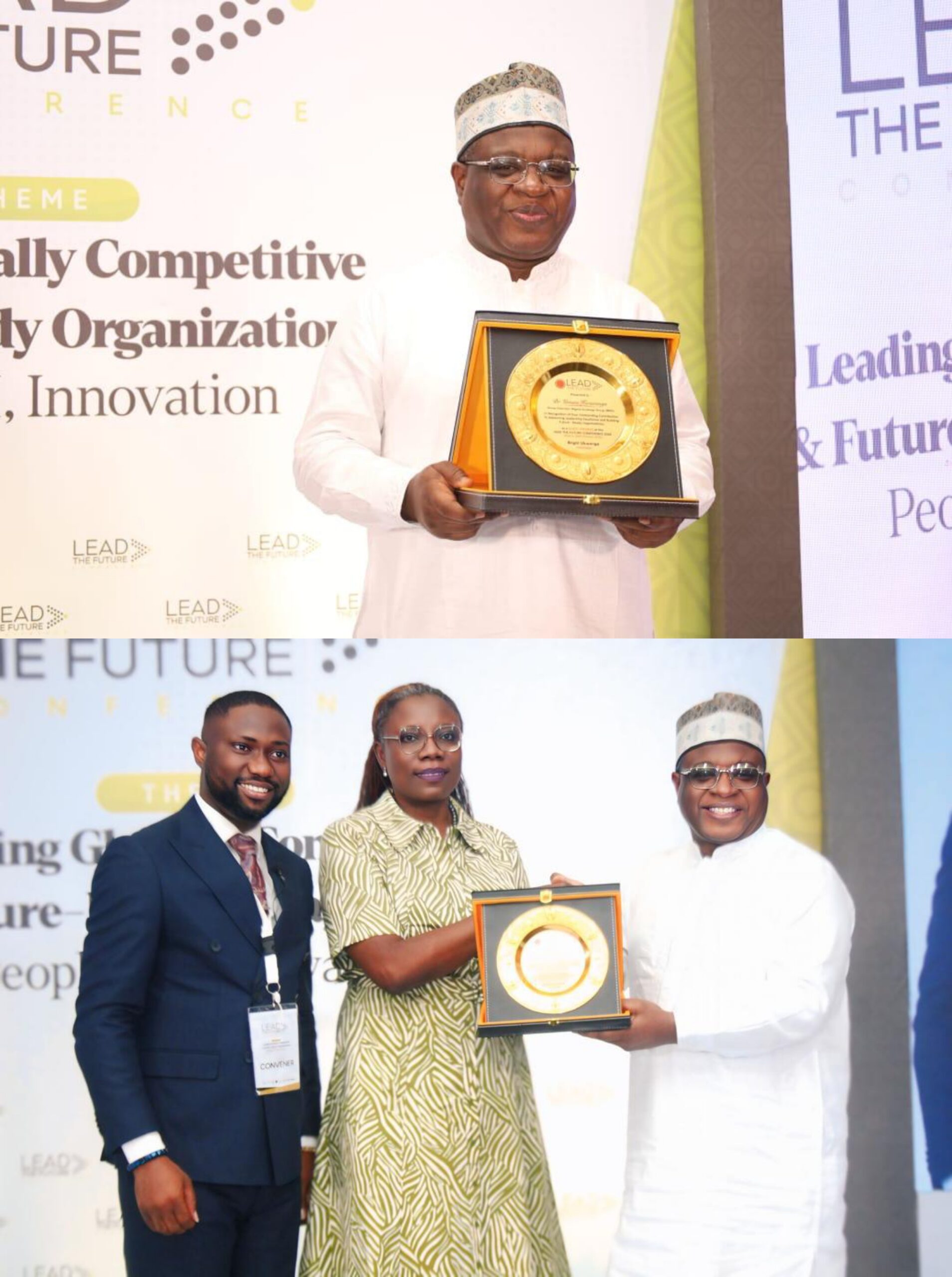
The Group Chairman of Nigerian Exchange Group, Alhaji (Dr.) Umaru Kwairanga, has called for stronger institutions, responsible leadership and deliberate investment in young professionals to translate Nigeria’s economic potential into sustainable growth.
Speaking as chairman of a leadership event organised by SixthSense Leadership at the Oriental Hotel, Lagos, Kwairanga said the country’s development would depend not only on its resources and opportunities but also on the quality of decisions made by those entrusted with responsibility.
He noted that Nigeria’s enterprising population, natural resources and growing pool of professionals offered considerable advantages, but turning those strengths into lasting progress required credible institutions and leaders guided by integrity, accountability and good governance.
“Leadership is fundamentally about stewardship. It is about recognising that every position of responsibility comes with an obligation to build something that will endure beyond one’s tenure,” he said.
Kwairanga argued that leadership should be assessed beyond an individual’s achievements while in office, with greater attention paid to the strength of the institution left behind and the opportunities created for future generations.
He said this responsibility had become particularly important as Nigeria navigated economic and structural changes, technological advances, demographic pressures and shifting expectations in an increasingly connected global economy.
According to him, these developments require leaders who can adapt, make disciplined decisions and embrace new approaches without compromising sound governance.
Drawing on the experience of the capital market, Kwairanga said **investor confidence** depended on transparency, consistency and trust in the institutions supporting investment opportunities.
“Investors commit capital not simply because opportunities exist, but because they have confidence in the institutions, systems and governance structures that support those opportunities,” he said.
He explained that the same principle applied across the economy, as businesses with credible leadership and sound governance were better positioned to attract investment, while transparent and effective public institutions earned trust.
Strong institutions, he added, also supported economic competitiveness by providing continuity through changes in leadership and administration.
Kwairanga said Nigerian Exchange Group recognised its responsibility to support enterprise, facilitate capital formation and widen participation in economic opportunities.
Delivering on those responsibilities, he noted, required continuous institutional development, collaboration and sustained confidence among investors and other market participants.
He also urged leaders to make succession planning, mentorship and talent development central to their responsibilities, warning that the country’s young population would need more than talent alone to fulfil its potential.
Young professionals, he said, required opportunities to learn, exercise responsibility and develop judgement through practical experience.
“We must be deliberate about creating environments in which younger professionals can contribute ideas, challenge established assumptions constructively and prepare to take on greater responsibilities,” he said.
Kwairanga maintained that leadership should enable the emergence of capable successors rather than become a barrier to their advancement.
He further called for closer cooperation among government, businesses and professional institutions, saying Nigeria’s economic challenges could not be resolved by any sector acting alone.
According to him, progress required agreement on shared priorities and a willingness to work across institutional and sectoral boundaries.
He commended the event’s convener, Mr Bright “UK” Ukwenga, and the SixthSense Leadership team for bringing together business leaders, professionals and policymakers to exchange ideas on leadership and national development.
However, he urged participants to move beyond discussion and apply the lessons from the gathering within their organisations.
“The value of a leadership conference is ultimately demonstrated by what participants do differently after the event,” he said.
Kwairanga concluded that Nigeria’s future would be shaped by its ability to build credible institutions, make responsible decisions, invest in people and sustain progress across generations.
He urged leaders to approach their responsibilities with purpose and humility, describing leadership above all as a call to service.