

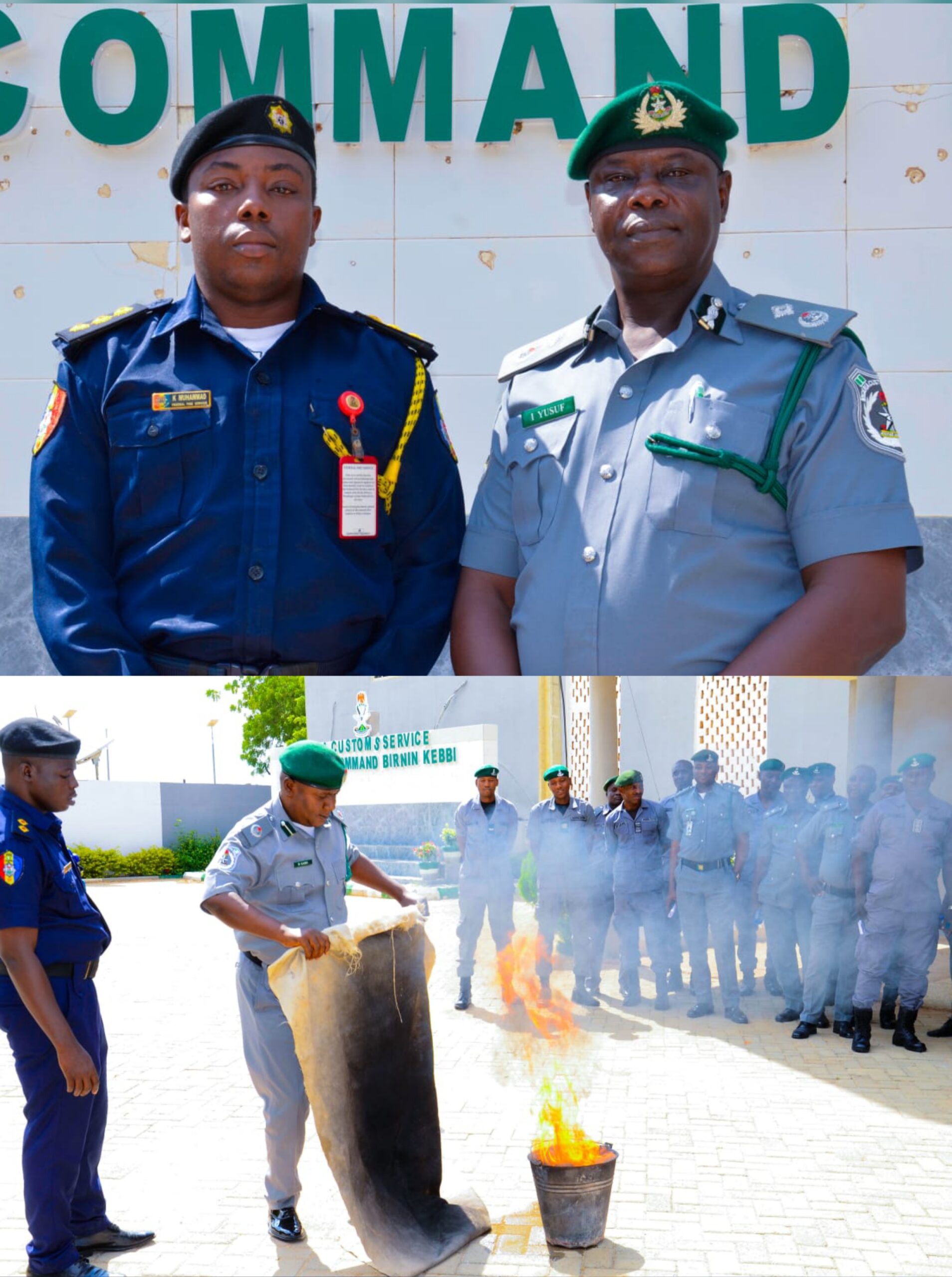
The Kebbi Area Command of the Nigeria Customs Service, in collaboration with the Federal Fire Service, has organised a basic firefighting and fire extinguisher drill training to equip officers and men of the Command with essential techniques for preventing and extinguishing fires at the incipient stage.
The training was held on Thursday, 20 August 2026, at the Command Headquarters in Birnin Kebbi. It was chaired by the Deputy Comptroller of Customs, Ibrahim Yusuf, who represented the Customs Area Controller, Comptroller Mahmoud Matawalle Ibrahim, fdc. The programme was facilitated by Deputy Superintendent of Fire Kabiru Muhammad, alongside his co-facilitators, and was attended by senior officers and men of the Command.
In his opening remarks, the Deputy Comptroller emphasised that fire safety is a responsibility that belongs to everyone. He noted that fires can occur unexpectedly and that having the right knowledge and skills can make the difference between a minor incident and a major disaster.
During the training, Deputy Superintendent of Fire Kabiru Muhammad reiterated that fire safety is a shared responsibility among building owners and managers, employees and occupants, as well as fire safety professionals. He commended the Comptroller for providing the necessary fire safety equipment and facilitating the training. He urged officers and men to take the knowledge acquired seriously, noting that they could find themselves in situations where the skills learned during the training might help them save lives and property.
In the course of the training, officers and men were taken through the principles of fire extinction, causes and prevention of fire, and the proper use of fire extinguishers, fire blankets and fire buckets. The training concluded with a practical demonstration, during which officers and men were given the opportunity to practise the use of firefighting equipment under the supervision and guidance of fire safety professionals.
In his closing remarks, the Deputy Comptroller encouraged all officers and men who participated in the training to extend the knowledge and skills acquired to their families and communities, as the ability to respond appropriately to a fire emergency at its incipient stage can help save lives and protect property.