

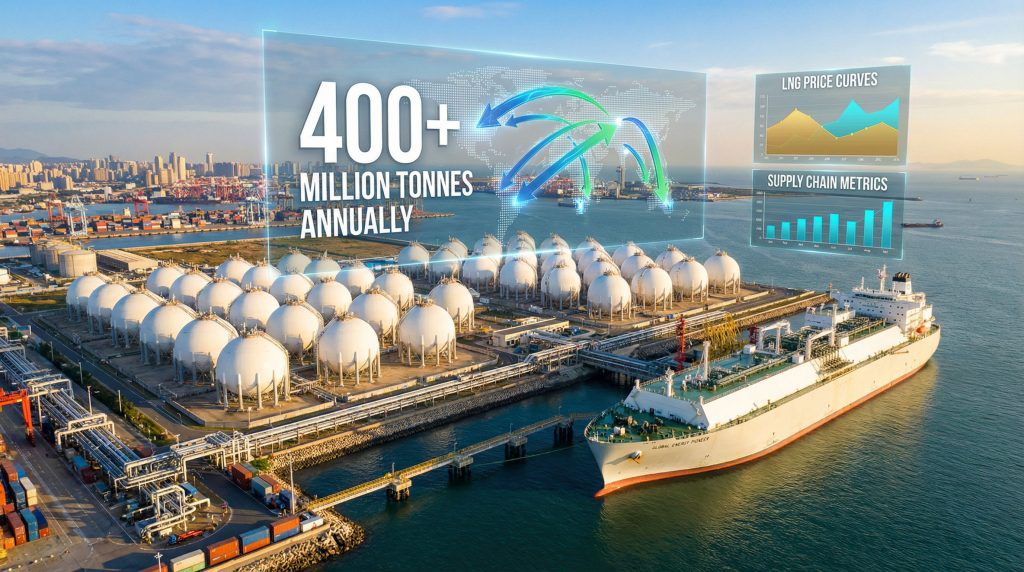
Liquefied Natural Gas (LNG) is emerging as the backbone of the world’s shifting energy architecture, stepping in as oil‑supply disruptions mount due to the ongoing conflict involving Iran. Unlike pipeline‑delivered gas, LNG creates a flexible, global marketplace where cargoes can be rerouted in response to price signals, demand shifts, and geopolitical tensions, fundamentally reshaping how energy flows across continents.
At the heart of this transformation is Asia. China, India, Japan, and South Korea are driving the next wave of LNG demand, competing not only for volumes but for security of supply. Importers are deploying a dual strategy: securing long‑term contracts to guarantee base‑load supply while expanding regasification capacity and maintaining exposure to spot markets for flexibility. This evolution signals that LNG is no longer viewed merely as a “transition fuel” but as a core pillar of energy security.
On the supply side, three major players dominate the global LNG landscape. The United States offers unmatched flexibility, with cargoes that can shift between Europe, Asia, and Latin America depending on where prices are highest. Qatar remains the volume leader, providing scale and cost‑advantaged supply underpinned by long‑term contracts. Australia adds regional stability, anchoring Asia‑Pacific trade flows with reliable supply and established shipping routes.
Experts warn, however, that the system is tightening. Unlike oil, LNG depends on a tightly linked chain of specialized infrastructure, liquefaction plants, specialized tankers, and regasification terminals, making the market less nimble in the face of sudden disruptions. When capacity is constrained, the impact is immediate: spot prices surge, buyers scramble for cargoes, and long‑term contracts become highly prized assets. Recent market behaviour reflects this shift, with buyers increasingly prioritising supply security over trading flexibility and sellers gaining stronger leverage in contract negotiations.
Even as new LNG projects move forward, they do so slowly. Large‑scale liquefaction terminals require years to build and billions of dollars in investment, meaning that near‑term markets will remain acutely sensitive to geopolitical shocks and infrastructure bottlenecks. A new industry report underscores that LNG is no longer a secondary complement to oil; it is evolving into a parallel energy system in its own right, with distinct pricing dynamics, risk profiles, and growing strategic importance in global energy diplomacy.