

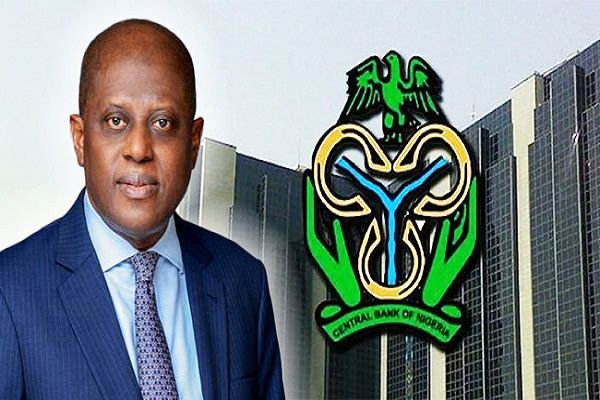
The Central Bank of Nigeria (CBN) has reaffirmed its commitment to strengthening Shariah governance, regulatory clarity, and risk management in the non‑interest financial services sector. The Bank said this is essential to sustaining public confidence, financial stability, and the orderly growth of the Islamic and Shariah‑compliant finance sub‑sector.
The commitment was restated at the 2nd Annual Interactive Session between the CBN’s Financial Regulation Advisory Council of Experts (FRACE) and the Advisory Committees of Experts (ACEs) of Non‑Interest Financial Institutions (NIFIs), held on Thursday, 7 May 2026 at the CBN Auditorium. Deputy Governor, Financial System Stability, Mr. Philip Ikeazor (represented by Dr. Rita Ijeoma Sike, Director, Financial Policy and Regulation Department), described the session as a strategic platform for deepening the credibility, resilience, and soundness of the non‑interest financial system.
Role And Growing Importance Of NIFIs
Ikeazor noted that Non‑Interest Financial Institutions are playing an increasingly strategic role by offering ethical, Shariah‑compliant alternatives to conventional banking, while supporting financial inclusion, real‑sector financing, micro, small and medium‑scale enterprise (MSME) development, and broader economic inclusion. However, he flagged that as the industry grows in size and complexity, it faces unique risks such as non‑compliance with Shariah principles, governance weaknesses, operational vulnerabilities, and emerging technology‑related risks.
If not properly managed, he warned, these risks could erode public confidence and threaten the stability and credibility of the entire non‑interest finance ecosystem. To address this, the CBN established FRACE and made it mandatory for every NIFI to constitute an ACE, creating a harmonised governance and advisory framework across the sector. Sustained interaction between FRACE and ACEs is intended to ensure that Shariah and regulatory expectations are clearly understood and consistently applied.
Key Themes From The Session
The event’s objectives, as outlined by the Deputy Governor, include institutionalising robust Shariah governance within NIFIs and providing a structured platform for dialogue, knowledge‑sharing, and collaboration. The interactive session featured two technical papers: the first on “Shariah Non‑Compliance Risk in Non‑Interest Banks and its Impact on the Non‑Interest Financial Services Industry,” delivered by Prof. Bashir Aliyu Umar, FRACE Deputy Chairman; the second on “Islamic Fintech and Financial Inclusion,” presented by Muhammad Kabir Muhammad and Mustapha Ishaq.
Participants examined practical challenges, capacity‑building needs, the independence of ACEs, risk‑mitigation strategies, and ways to enhance governance and innovation within the sub‑sector. In his closing remarks, FRACE member Prof. Abdul‑Razzaq Alaro urged stakeholders to implement the resolutions and outcomes of the session, stressing that the value of the forum would be measured by tangible improvements in the sector.
FRACE And ACE As Governance Anchors
FRACE acts as a bridge between conventional financial regulation and the specific requirements of faith‑based finance, promoting consistent standards, strengthening investor confidence, and assisting the CBN on complex regulatory and Shariah‑interpretation issues. Meanwhile, ACEs perform analogous advisory and oversight roles within individual NIFIs, ensuring that Shariah‑compliant operations remain legally regulated, ethically grounded, and aligned with both national rules and Islamic principles.
The 2nd Annual FRACE–ACE Interactive Session brought together members of FRACE, heads and members of various ACEs, managing directors of non‑interest banks, senior CBN officials, and other stakeholders, including representatives of the Bank of Industry and the Securities and Exchange Commission, underscoring the Bank’s broader push to embed sound governance and rigorous risk management at the core of Nigeria’s evolving non‑interest financial system.