

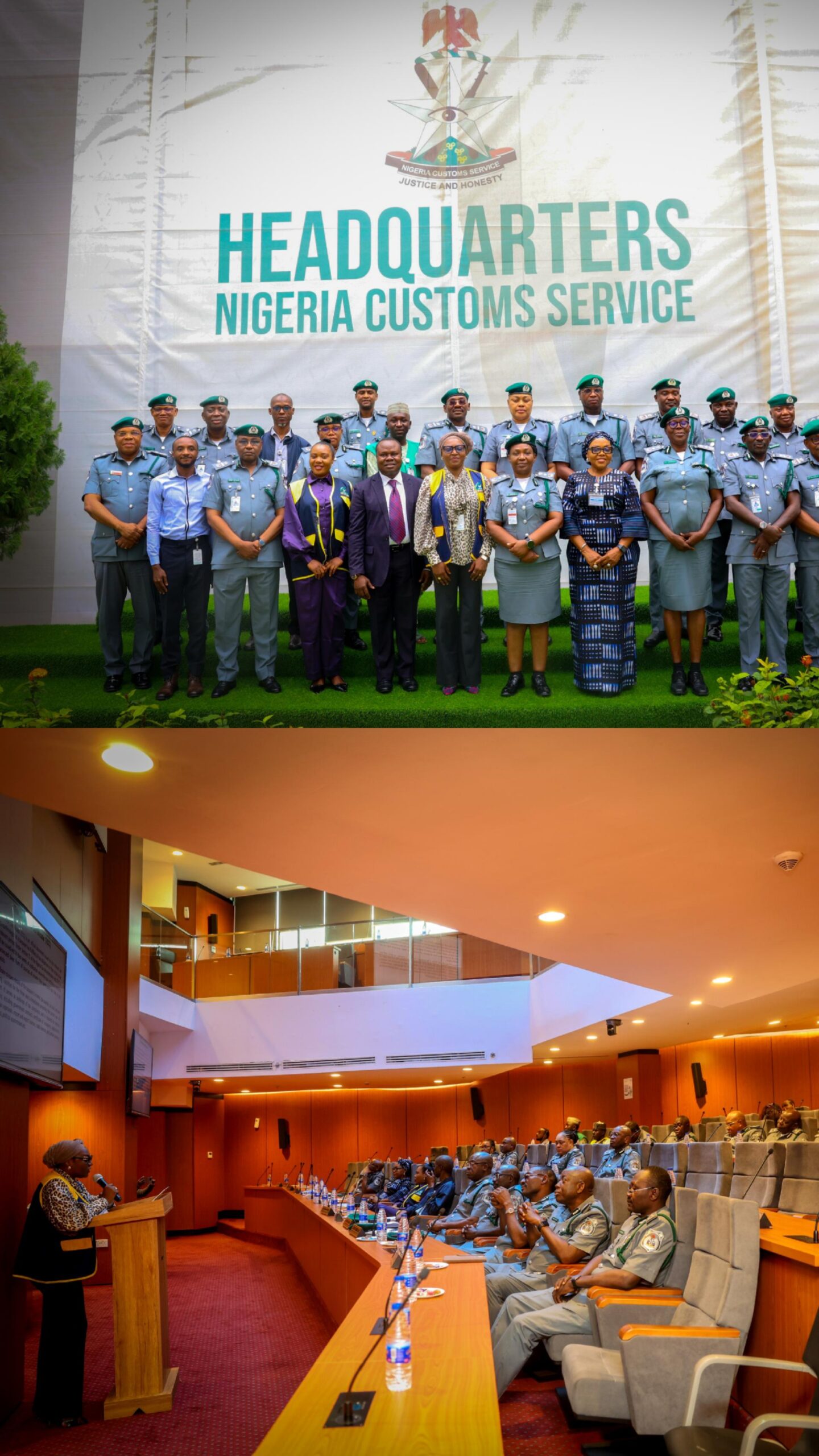
The Nigeria Customs Service partnered with the Nigeria Revenue Service to launch a comprehensive two-day training session for customs officers on the Federal Government’s revised tax policies, aimed at ensuring all personnel grasp their responsibilities within the nation’s changing tax framework.
The programme took place Wednesday, June 17 through Thursday, June 18, 2026, at the Service’s main headquarters in Maitama, Abuja, drawing participation from senior Management Team members, Comptrollers, Superintendents, and officers from lower ranks.
Deputy Comptroller-General Kikelomo Adeola, overseeing Finance, Administration and Technical Services, opened the training representing Comptroller-General Adewale Adeniyi, explaining the session was essential given recent modifications to the country’s tax administration procedures.
“Having been assigned a crucial function in generating national revenue, our Service must stay current with changing tax policies and guarantee full adherence to our legal duties,” Adeola stated. “This training aims to provide our officers with the necessary understanding to successfully manage the new tax framework while maintaining top-tier professionalism and accountability.”
DCG Adeola reaffirmed the Service’s dedication to meeting tax obligations, emphasizing that officers need to stay knowledgeable about tax issues, especially as the Service maintains its central role in collecting government revenue.
“Meeting tax requirements goes beyond following legal rules—it demonstrates our dedication to openness, responsibility, and advancing the nation. By strengthening our personnel’s capabilities, we enable the Service to adjust smoothly to new fiscal changes while maintaining public trust in our work,” she explained.
Victoria Udo, Assistant Director of Tax at the Nigeria Revenue Service, highlighted that Pay-As-You-Earn continues serving as one of the most dependable methods for gathering personal income tax, with compliance reaching beyond legal duties to include obtaining tax clearance certificates and accessing other financial benefits.
Udo encouraged attendees to fully utilize the training by raising questions and exchanging insights, noting that deeper comprehension of updated tax regulations would improve how effectively they perform their duties.