

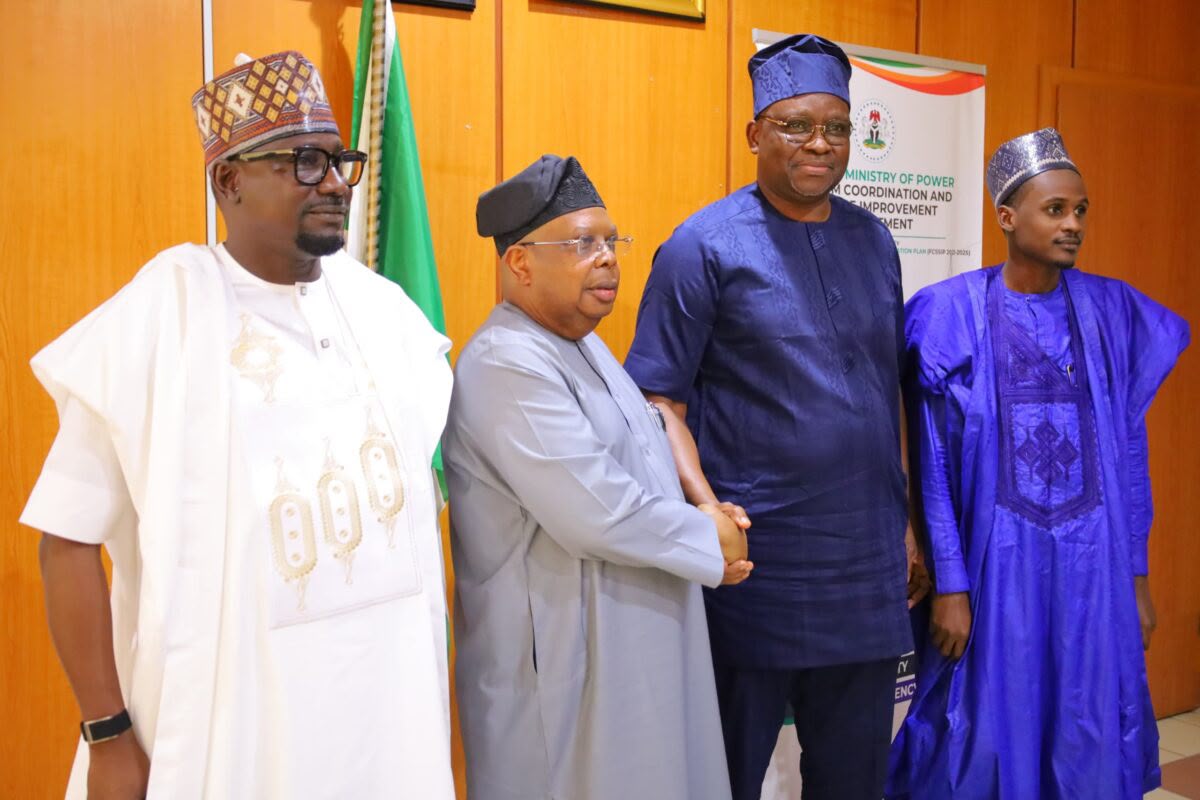
Former Ekiti State Governor Ayo Fayose has assumed office as Chairman of the Governing Board of the Rural Electrification Agency (REA), promising to mobilise the political support and funding needed to expand electricity access in underserved communities.
Minister of Power Joseph Tegbe inaugurated Fayose and other members of the governing board in Abuja on Friday. Alhaji Ahmadu Abubakar, Ilyasu Makinta and three other members and non-executive directors were also inaugurated, while Abba Aliyu formally took office as the agency’s Managing Director.
Fayose thanked President Bola Ahmed Tinubu for the confidence placed in him and the other appointees. He said his immediate focus would be to reposition the agency and ensure its programmes produce visible improvements in electricity access, especially in rural and underserved areas.
The new chairman pledged to use his position to help secure political backing and funding for the agency’s short- and long-term programmes. He said the board had already begun engaging stakeholders to mobilise the resources required to deliver its mandate.
Fayose also stressed that the REA’s responsibility extends beyond installing power infrastructure. According to him, electrification must improve the quality of life, expand economic opportunities and ensure that communities feel the practical impact of government energy interventions.
REA Managing Director Abba Aliyu thanked the President for the opportunity to serve and promised to work closely with the board to extend electricity to both connected and unserved communities across the country.
Tegbe said Nigeria’s power policy was moving beyond the measurement of generation in kilowatts and megawatts to a more meaningful assessment of how many people and communities were actually receiving electricity. He described the REA as a strategic bridge between national energy policy and grassroots development.
The minister said mini-grids, solar home systems and other electrification projects should be viewed as investments in human capital, economic inclusion and national development. He said powering markets, schools, primary healthcare centres, farms and small businesses could unlock new opportunities and improve livelihoods.
Tegbe urged the new board to provide strong strategic oversight, uphold transparency, encourage innovation and ensure that public funds are used efficiently. He also called for stronger partnerships with development organisations and private investors to accelerate rural electrification.
The REA has planned more than 500 electrification projects under its 2026 programme, covering grid extensions, mini-grids and standalone renewable-energy systems for underserved communities. Tegbe therefore charged the board to make decisions based on their effect on ordinary Nigerians and to deliver measurable results as electricity-sector reforms continue.