

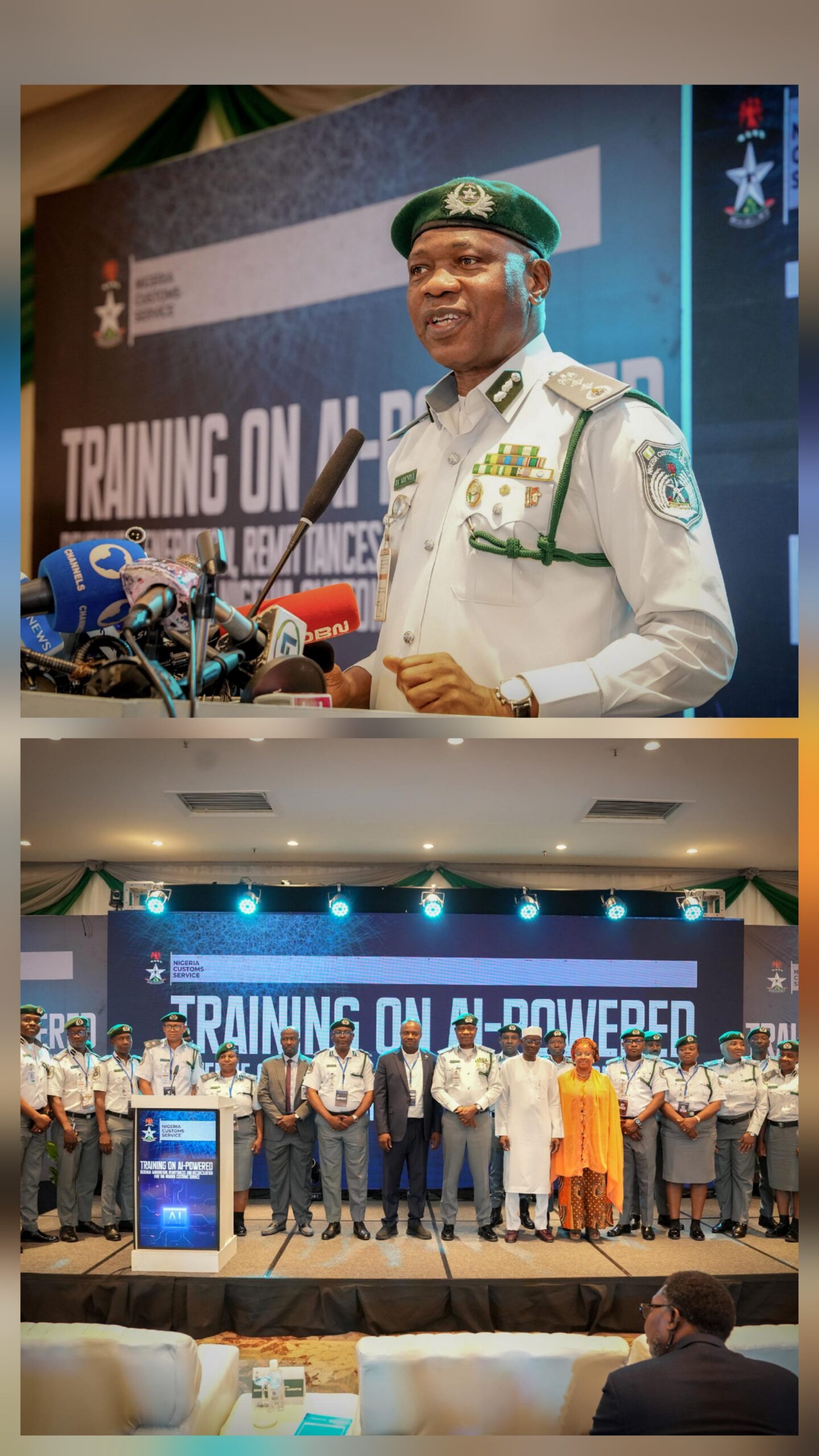
The Nigeria Customs Service (NCS) has begun a specialised capacity‑building programme on Artificial Intelligence (AI)‑driven revenue generation, remittances, and reconciliation as part of its drive to modernise public financial management and improve transparency. The training took place at the Ladi Kwali Hall of the Abuja Continental Hotel on Monday, 13 April 2026, and brought together senior Customs officers, technology experts, and members of legislative oversight committees from the National Assembly.
Addressing participants, Comptroller‑General of Customs Adewale Adeniyi said the Service is committed to harnessing technology to deepen transparency in public accounting and to better understand trade patterns within the global value chain. He described AI as a collective opportunity for Customs, urging officers to actively engage facilitators, ask questions, and apply the skills to strengthen operations.
Deputy Comptroller‑General Kikelomo Adeola, in charge of Finance, Administration and Technical Services, underlined the timeliness and strategic importance of the programme. She said AI is no longer a futuristic concept but a practical tool that must be integrated into revenue‑management systems. The training, she added, is designed to close gaps in revenue accounting and remittances, while equipping officers with AI‑driven skills to protect and optimise public funds.
The presence of members of the House and Senate Public Accounts Committees was highlighted as a symbol of growing collaboration between the NCS and the National Assembly. Both Chairmen, Bamidele Salam of the House committee and Senator Ahmed Aliyu of the Senate panel, commended the Service for its reform‑driven agenda and the adoption of AI as a governance tool. They stressed that the resilience of any system depends on the people who operate it and called for enduring, technology‑backed structures that can serve future generations.
Technology expert Bamidele Oyedeji delivered a key presentation, demonstrating how AI can enhance trade facilitation, improve compliance monitoring, and support more accurate revenue and remittance reconciliations. Overall, the training underscores the NCS’s determination to leverage emerging technologies to strengthen revenue assurance, deepen transparency, and raise the efficiency and credibility of its operations in Nigeria’s evolving trade and fiscal landscape.