

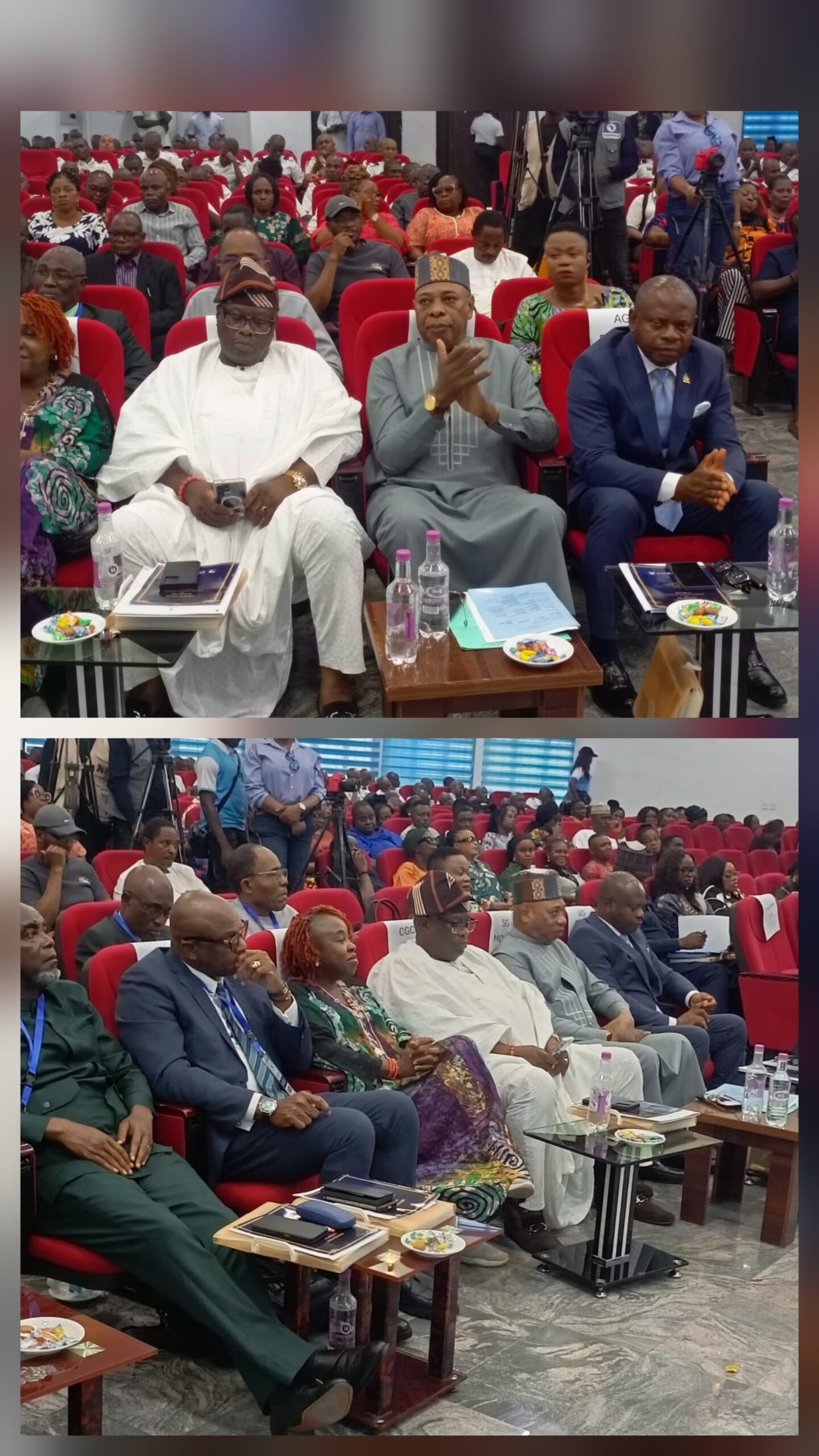
The Secretary General of the Maritime Organisation of West and Central Africa (MOWCA), Dr. Paul Adalikwu, has reiterated the organisation’s determination to close the region’s maritime skills gap through stronger ties among training institutions in West and Central Africa. He spoke at the opening of a four‑day exchange visit by the Regional Maritime University (RMU), Accra, and the Academie Régionale des Sciences et Techniques de la Mer (ARSTM), Abidjan, to the Maritime Academy of Nigeria, Oron (MAN Oron), underscoring that more than 90% of the region’s trade moves by sea yet its full maritime potential remains constrained by weak human‑capital development.
Adalikwu pointed to key hurdles in maritime education, including digitalisation and the integration of emerging technologies, decarbonisation and environmental compliance, and persistent security threats in the Gulf of Guinea. He also highlighted the tightening international standards for training and certification, which he said can be met more effectively through regional cooperation that boosts global recognition of African maritime qualifications and improves job prospects for young people from the region.
He outlined how the collaboration will serve as a vehicle for harmonising curricula and training benchmarks, enabling faculty and student exchanges, sharing laboratories, simulators, research outputs, and managerial practices, and co‑creating certification frameworks that meet international norms. Over time, he noted, this will help forge a unified regional profile in maritime education and support the emergence of a tightly knit maritime knowledge network across MOWCA states.
The MOWCA Secretary General linked the initiative to the organisation’s broader agenda: cultivating a skilled and adaptable maritime workforce, promoting safe, secure, and efficient shipping, deepening regional integration, and providing the technical backbone for the African Continental Free Trade Area (AfCFTA) and expanded intra‑African commerce.
Adalikwu added that the partnership will also stimulate research into how African maritime institutions can contribute to alternative fuel and energy solutions and support the creation of sustainable maritime agencies, including the proposed Regional Maritime Development Bank. He emphasised that such structures are critical for financing infrastructure, research, and training without relying solely on external donors.
The Acting Rector of MAN Oron, Dr. Kevin Okonna, hailed the inaugural exchange visit hosted in Nigeria as a landmark effort to connect regional and global maritime academies. He recalled that in November 2025, MAN Oron received a delegation from RMU, Accra, during its graduation ceremony, where both sides signed a memorandum of understanding now close to full execution. He also noted that MAN Oron had previously visited the Liberian Maritime Administration to strengthen the international acceptability of its certificates.
Okonna praised MOWCA for leading the drive to standardise maritime education and training and expressed confidence that the conference’s technical sessions, panels, and networking would deepen understanding of updated frameworks such as the Standards of Training, Certification and Watchkeeping (STCW). He said the partnership would foster staff and student exchanges, cross‑cultural interaction, and a stronger sense of solidarity within the region’s maritime community.
The Acting Vice Chancellor of RMU, Dr. Jethro Brooks, welcomed MOWCA’s role and called on all regional institutions to join the momentum to fast‑track Africa’s maritime growth. He argued that Africa’s maritime challenges are best solved collectively rather than in isolation and that shared facilities, aligned syllabi, and common quality benchmarks will produce a workforce that is both locally grounded and globally competitive. He said RMU is poised to support the agreement’s goals and help raise the standard of maritime education across the continent.
Colonel Coulibally Kareem, Director General of ARSTM in Abidjan, commended the MOWCA Secretary General for laying the groundwork for a long‑term partnership that will position African maritime training at par with global peers. He said the visit offers a practical way to benchmark programmes, diagnose common training weaknesses, and co‑design responses. He pledged his academy’s full backing for the initiative and its implementation.
Mr. William Azuh, former Head of the African Section in the Sub‑division for Maritime Development at the International Maritime Organisation (IMO), described the gathering as a timely and strategic move toward professionalising maritime training in MOWCA countries and the wider African space. He said that sustained regional coordination, backed by strong institutional alliances, will be essential for building a maritime sector that is safer, more environmentally sound, and better integrated into the global supply chain.