

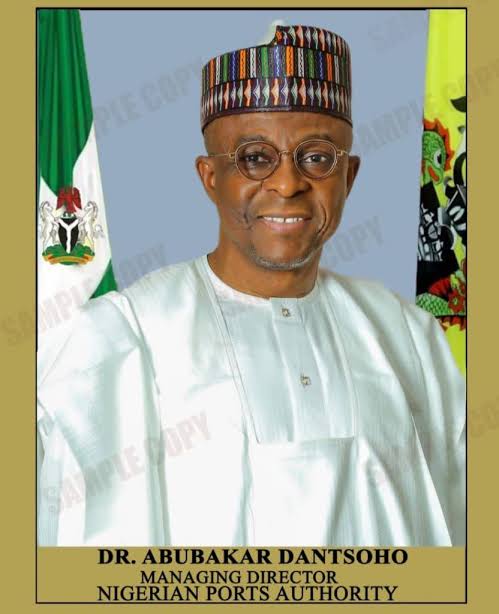
Dr. Abubakar Dantsoho, Managing Director of the Nigerian Ports Authority and President of Port Management Association of West and Central Africa (PMAWCA), pitched port modernisation as a key driver of national and regional economic transformation in his opening remarks at the PMAWCA Board Committee Meeting in Lagos on 18 May 2026. He told the gathering that Nigeria’s ports have undergone substantial reforms over the past two years, which have improved cargo handling times, eased congestion, and boosted confidence among international shipping lines.
Dantsoho traced these gains to strategic reforms aligned with the federal government’s Renewed Hope Agenda and the African Continental Free Trade Area (AfCFTA), noting that rising trade volumes and increased shipping activity around Apapa, Tincan Island, Onne, and the newly operational Lekki Deep‑Sea Port are now serving as a barometer of Nigeria’s re‑emerging competitiveness. He said the NPA has focused on infrastructure upgrades, process automation, and stronger stakeholder engagement, leading to shorter vessel turnaround times, better security and reliability for cargo operators, and an improved investor perception of the Nigerian maritime sector.
Describing PMAWCA as a vital platform for regional policy coordination, Dantsoho said that the current meeting must produce actionable outcomes on issues such as port security, digitalisation, tariff harmonisation, and regional port connectivity. He argued that cohesive, cross‑border policies are needed to ensure that improvements in one country’s port system are not undermined by bottlenecks in neighbouring states.
The PMAWCA president also highlighted Nigeria’s recent milestones in global maritime affairs, including the country’s election to IMO Category C, his own historic election as PMAWCA President for the first time in 54 years, and his subsequent appointment as Vice President of the International Association of Ports and Harbours (IAPH). He credited the consistent support of the Honourable Minister of Marine and Blue Economy, Gboyega Oyetola, and the broader federal leadership for creating the enabling environment for these gains.
Dantsoho told the delegates that the success of individual ports is ultimately measured by the socio‑economic returns they deliver to host communities and national economies. He urged member administrations to use the committee meeting to deepen cooperation on training, equipment sharing, data‑driven planning, and joint investment frameworks, so that port growth translates into better infrastructure, more jobs, and higher living standards along the West and Central African coastlines.
He concluded by thanking all participants for their presence and expressing confidence that the discussions would strengthen PMAWCA’s institutional capacity and solidify its role as a regional standard‑setter in port governance, trade facilitation, and maritime development.