

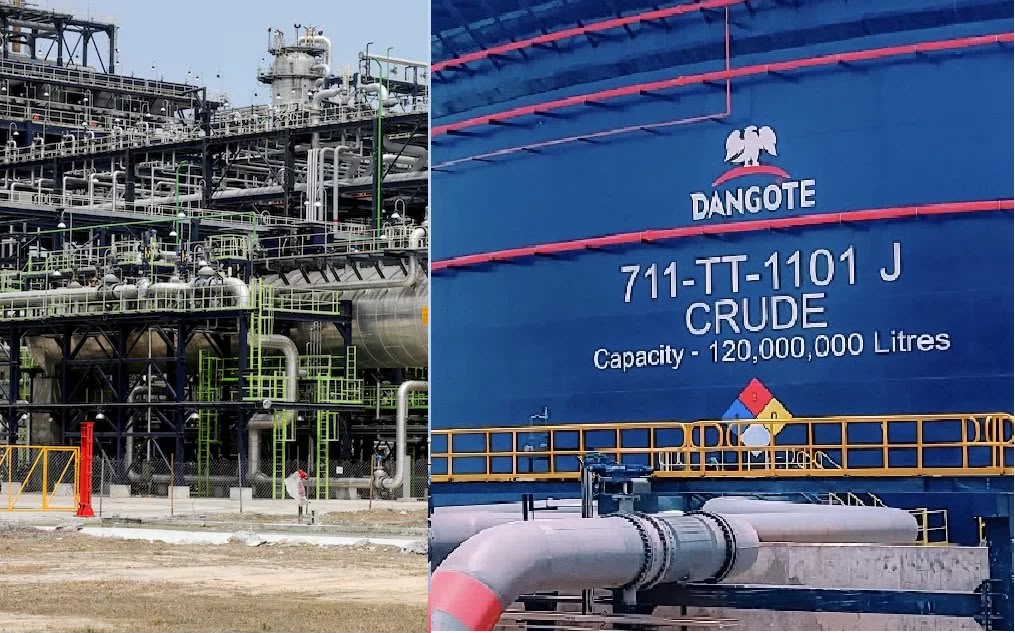
An energy expert says Dangote Refinery’s growing reliance on imported crude is making it harder for the plant to recover costs, especially now that some of its petrol sales have shifted to dollar pricing. The shift, he argues, could add pressure to fuel prices and worsen foreign exchange demand in Nigeria.
The concern is that the refinery was expected to support cheaper local fuel under the naira-for-crude arrangement, but crude shortages at home have forced it to buy a larger share of feedstock from the international market. Since those purchases are dollar-denominated, selling refined products only in naira becomes more difficult to sustain.
According to the expert, the result is that marketers may end up paying more at the wholesale level, with the extra cost flowing through the supply chain to retailers and eventually consumers. He warned that this could raise pump prices rather than lower them, which runs against the original promise of domestic refining.
The development has also created uncertainty in the downstream market, where marketers recently halted petrol loading from the refinery. That pause comes at a time when Nigeria is trying to build a more market-driven fuel system under the Petroleum Industry Act.
The expert said the government needs to move quickly to restore confidence by clarifying how much crude can be made available for local refining under the naira-for-crude framework. He added that the longer-term solution is to increase crude production, reduce supply bottlenecks and make more barrels available for domestic processors.
He noted that Nigeria’s production has improved, but competing export commitments and foreign exchange needs still limit what can be set aside for local use. In his view, more output from onshore fields and a more stable crude supply pipeline would ease pressure on refineries and help support a more competitive downstream market.
He also said the Petroleum Industry Act does not specifically require downstream products to be priced in dollars, though some regulatory exemptions and free-zone rules may give refiners room to transact in foreign currency at the wholesale level. Even so, he does not expect that flexibility to extend to filling stations selling directly to motorists.
The bigger issue, he said, is balancing deregulation with affordability. Nigeria, he argued, needs more refiners, more supply options and stronger policy coordination if it wants a downstream market that is both competitive and stable.