

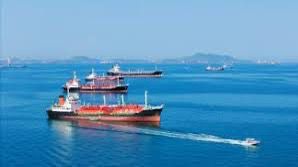
Global oil market operations face additional strain as Yemen’s Iran-aligned Houthis announced Monday they would ban Israel-linked ships from the Red Sea following Israel’s renewed military attacks on Iran, intensifying concerns about global shipping and energy flows.
Iran’s closure of the Strait of Hormuz since Israel and the United States attacked it on February 28 has disrupted most oil and energy exports from the Gulf, driving up prices and triggering a major energy shock.
Saudi Arabia has responded by redirecting more than 70 per cent of its normal daily crude exports to the Red Sea port of Yanbu, providing a critical lifeline for the energy market and helping contain global oil prices.
Any sustained Houthi disruption to Red Sea shipping, including potential attacks on vessels or ports, could create significant problems for the market.
A Houthi source told Reuters that preventing Israeli ships from transiting the Red Sea represents a first step, but if escalation continues, the group would stop all ships heading to Israel and implement additional measures.
During the Gaza war, the group’s attacks on Israel-linked shipping included any vessel belonging to companies using Israeli ports, dissuading most companies from using the route.
The Houthis emerged as a military, political, and religious movement in north Yemen during the 1990s, engaging in guerrilla warfare against the Sanaa government.
They follow the Zaydi sect of Shi’a Islam and strengthened ties with Iran after the 2011 Arab Spring, capturing the capital in 2014 and undermining a Gulf-backed political transition plan.
Saudi Arabia and Arab allies launched military intervention months later to restore the ousted government and dislodge a group they viewed as an Iranian proxy, with Riyadh considering Iran its primary regional rival.
As Yemen’s civil war reached stalemate, the Houthis attacked oil installations and infrastructure in Saudi Arabia and the United Arab Emirates using missiles and drones.
A 2022 truce between Yemen’s warring sides has largely remained in place.
Iran champions the Houthis as part of its regional Axis of Resistance, which includes Lebanon’s Hezbollah and Iraqi Shi’ite militias, though ties with the Yemeni movement are less clear than with those other groups.
The Houthis do not recognize Iran’s supreme leader as their ultimate religious authority like Hezbollah and Iraqi groups do. Their motivations are primarily domestic, though they remain ideologically aligned with Iran.
The U.S. states Iran has armed, funded, and trained the Houthis with Hezbollah assistance. The Houthis deny being an Iranian proxy and claim they develop their own weapons.
Following the October 7, 2023 Hamas attack on Israel and Israel’s Gaza campaign, the Houthis began firing at Israel and international Red Sea shipping in support of Palestinians.
Houthi Red Sea attacks severely disrupted global shipping, forcing Maersk, Hapag-Lloyd, and other major companies to divert around Africa via a longer, more expensive route.
A U.S.-led mission to restore free Red Sea navigation involved repeated strikes on Houthi targets and a defensive campaign shooting down hundreds of drones and missiles.
Some Houthi attacks continued until last summer, ending completely with the Gaza ceasefire in October.
While Hezbollah and Iraqi groups joined the war early with rocket and drone fire after initial U.S. and Israeli strikes on Iran, the Houthis have remained comparatively quiet.
Group leader Abdul Malik al-Houthi stated on March 5: Our fingers are on the trigger at any moment should developments warrant it.
Iranian military commanders have repeatedly warned the Houthis could join the war, with Revolutionary Guards Quds Force commander Esmaeil Qaani saying on June 1 they could choke off the Red Sea.
Before this week, the group’s only involvement included a few missile and drone attacks on Israel in late March and early April.
The reason for Houthi quietness remains unclear.
They and Iran may have wanted to use the threat of another major energy route closure to warn Israel and the United States against further escalation.
The Houthis may feel less committed to Iran’s security than Tehran’s other regional allies.
The group may also avoid antagonizing powerful, wealthy neighbor Saudi Arabia and risk reigniting conflict at home.